Why does parquet flooring lift?
Parquet flooring is made from individual timber blocks. Each block depends on the timber, adhesive and subfloor working together. When one part of that system changes, the floor can begin to move.
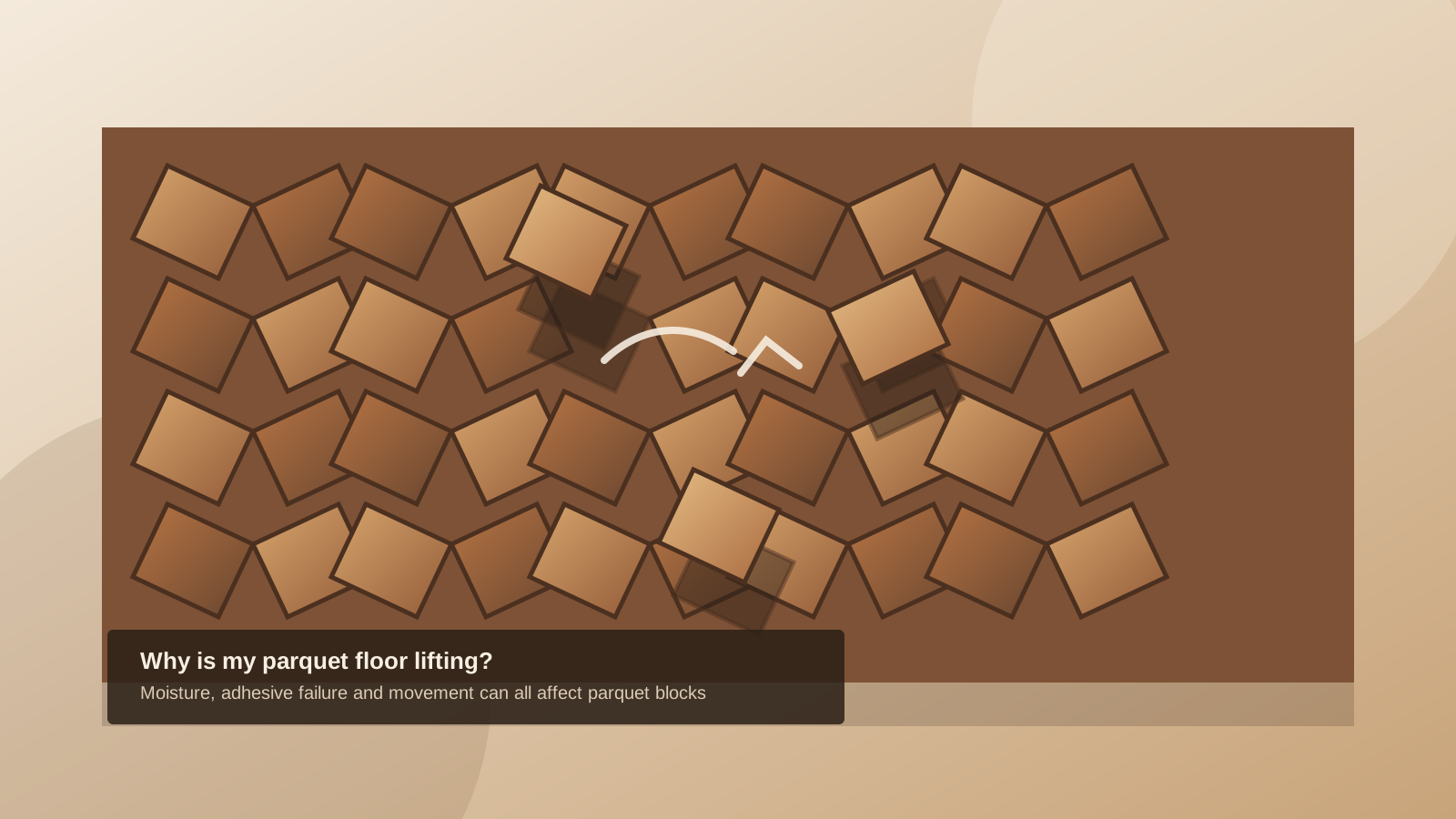
Lifting can happen when the timber expands, the adhesive fails, the subfloor changes or moisture enters the system. Sometimes one cause is obvious. In other cases, several smaller issues combine over time.
The visible lifting is often a symptom rather than the root cause. A raised edge or loose section tells you that something has changed below or within the floor, but it does not always tell you exactly what has happened.
This distinction matters. A few loose blocks caused by old adhesive may be repaired very differently from a larger section that has lifted after a leak or damp subfloor issue.
The first step is to understand the scale of the problem. Is the lifting limited to one small area, or are blocks moving across the room? Does the floor feel hollow, springy or soft? Has there been a recent spill, appliance leak or change in the property?
Answering those questions helps separate straightforward repair work from situations that need deeper investigation.
Moisture and water damage
Moisture is one of the most common causes of parquet movement. Timber naturally reacts to moisture changes, and parquet blocks can expand, swell, cup or lift when too much moisture enters the floor.
Leaks, spills, dampness, appliance failures and long-term moisture exposure can all affect parquet. The source may be obvious, such as a washing machine leak, or less obvious, such as moisture from a subfloor or repeated wet cleaning.
Parquet is especially sensitive to moisture because it is made from many small pieces. Each block can move slightly, and that movement can break the bond between the timber and the subfloor.
Moisture can also weaken old adhesives. A floor that has stayed stable for decades may begin to lift after a leak because the adhesive, timber and subfloor have all been stressed at the same time.
Not all moisture-related lifting means the floor is lost. Some floors settle after drying and can then be repaired, while others need local block replacement or more extensive work.
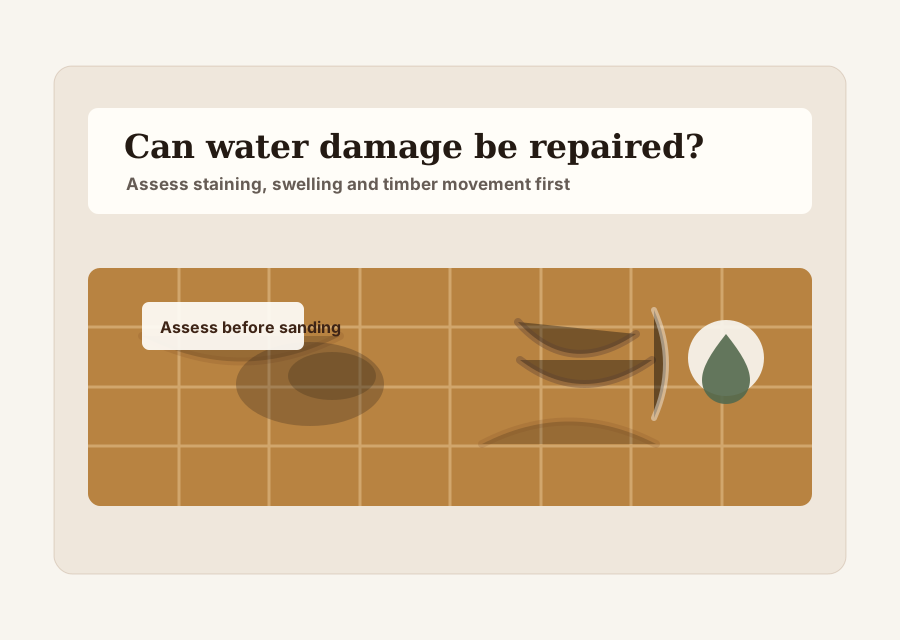
Our guide to water damaged wooden floors explains how moisture affects timber flooring and when repair, restoration or replacement may be considered.
The key is not to rush straight into sanding. A parquet floor affected by moisture should be assessed and allowed to dry appropriately before surface restoration is considered.
Adhesive failure
Adhesive failure is another common reason parquet blocks lift. Many older parquet floors were installed with adhesive systems that can become brittle, weak or less reliable after many years.
As adhesives age, individual blocks may begin to sound hollow, move underfoot or lift at the edges. In some rooms, the problem appears gradually. In others, several blocks may lift once one area has lost its bond.
Historic installation methods can also affect what happens later. Some older floors were installed over substrates that have changed over time, or with adhesives that do not behave like modern systems.
Adhesive failure does not automatically make restoration impractical. In many cases, loose or lifting blocks can be lifted, cleaned, prepared and secured back into position.
The important point is to understand whether the failure is localised or widespread. A small area of failed adhesive is usually more straightforward than a floor where most blocks have lost bond.
Old adhesive can also complicate sanding if blocks remain loose. Sanding over movement can create an uneven result and may make the problem worse, so stabilising the floor comes first.
Subfloor movement
Sometimes the parquet itself is not the source of the issue. The visible blocks may be lifting because the surface beneath them has changed.
Timber subfloors can move, flex, dry out or respond to changes in the building. Concrete subfloors can be affected by moisture, cracking, contamination or old preparation work.
Settlement and structural changes can also affect parquet. Older properties naturally move over time, and that movement can sometimes appear at floor level as gaps, lifted blocks or hollow-sounding sections.
If the subfloor is unstable, simply sticking blocks back down may not solve the problem. The repaired section may lift again if the underlying surface continues to move or remains unsuitable.
This is why assessment matters. A repair should consider the condition of the blocks and the condition of the surface they are being bonded to.
In some cases, localised preparation is enough. In others, the subfloor issue may need more attention before parquet restoration is sensible.
Can lifting parquet be repaired?
Often, yes. Lifting parquet can frequently be repaired where the movement is localised, the blocks are still usable and the subfloor can be prepared properly.
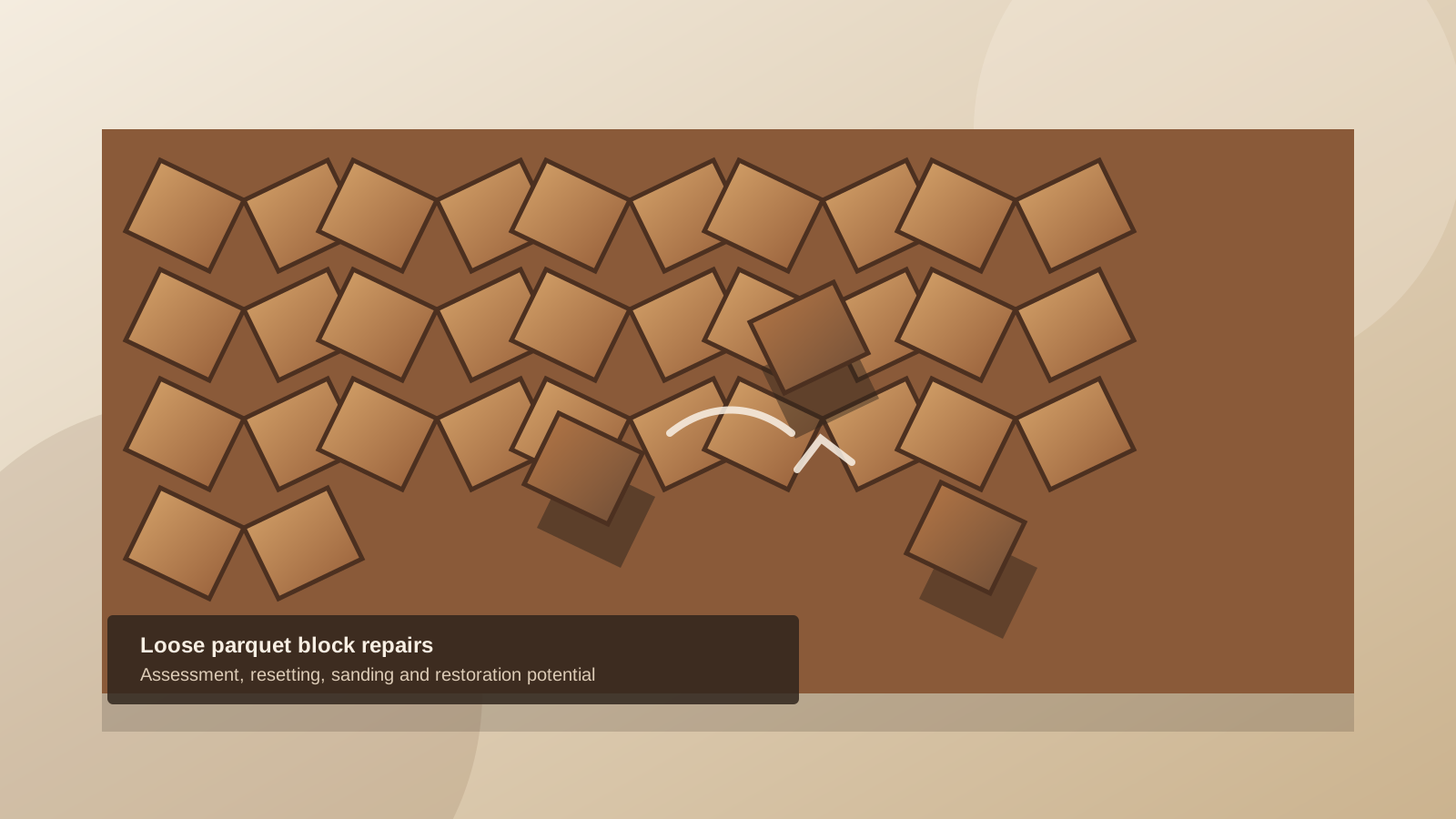
The repair process may involve lifting individual blocks, removing failed adhesive, cleaning the underside of the timber, preparing the substrate and re-bonding the blocks into the pattern.
Where blocks are damaged, distorted or missing, replacement sections may be needed. Matching timber, size and pattern is important because parquet repairs should sit naturally within the wider floor.
Our guide to whether loose parquet blocks can be repaired explains this repair-led approach in more detail.
Wood floor repairs often form the first stage. Once the floor is stable, parquet floor restoration may then involve sanding, finishing and protecting the surface.
The best results usually come from treating the cause before improving the appearance. If blocks are lifting because of moisture, adhesive failure or subfloor movement, those issues need to be understood before the floor is refinished.
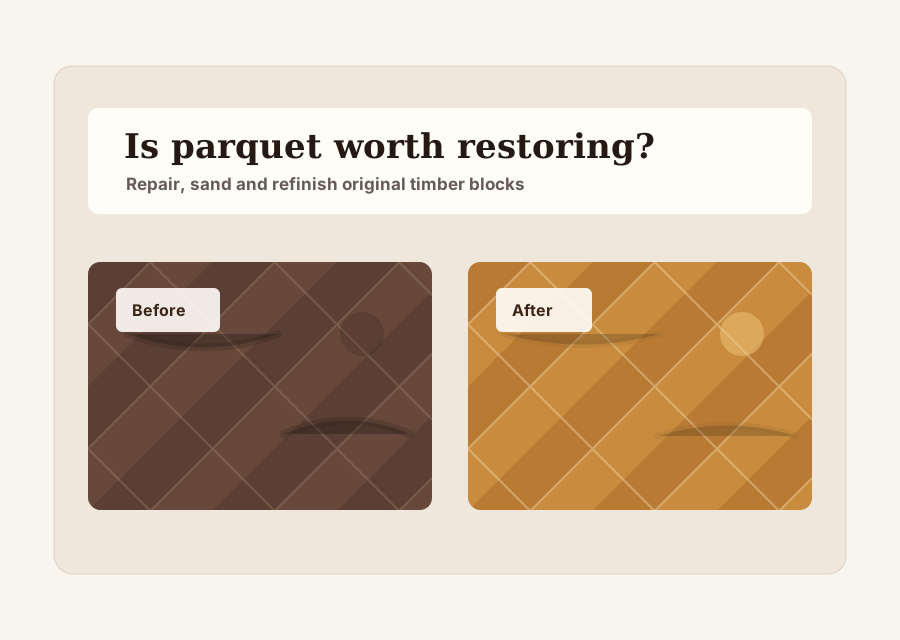
If you are deciding whether the work is worthwhile, our guide to whether your parquet floor is worth restoring explains how structure, repairs and replacement options are weighed up.
When replacement may be necessary
Most lifting parquet deserves assessment before replacement is assumed. Even floors that look poor can sometimes be repaired and restored successfully.
There are situations, however, where replacement may be more sensible. Severe structural failure is one example. If the subfloor cannot support a stable repair, surface restoration alone will not resolve the issue.
Widespread moisture damage can also change the recommendation. Blocks that are rotten, badly swollen, distorted or affected by long-term damp may not be suitable for reuse.
Extensive timber loss is another factor. If many blocks are missing or damaged beyond practical repair, the time and material required to rebuild the floor may become disproportionate.
Failed subfloors need particular care. If the problem sits below the parquet, the visible blocks may only be one part of a wider flooring issue.
These situations are less common than homeowners often expect, but they do occur. Our guide to when a wooden floor needs replacing explains the broader signs that replacement may be the better long-term route.
The right recommendation should be based on evidence: how much of the parquet is affected, whether the timber can be reused, whether the subfloor is sound and whether repair-led restoration represents sensible value.
Quick parquet assessment guide
Use this guide as a starting point. It cannot replace assessment, but it can help you understand whether lifting parquet is more likely to need local repair, deeper investigation or replacement.
Frequently Asked Questions
Why is my parquet floor lifting?
Parquet usually lifts because timber movement, moisture, adhesive failure or subfloor changes have broken the bond between the blocks and the surface below.
Can lifting parquet flooring be repaired?
Often, yes. Localised lifting can frequently be repaired by lifting, preparing and re-bonding blocks if the timber and subfloor are suitable.
Does water damage cause parquet lifting?
Yes. Moisture can swell timber, weaken adhesive and cause parquet blocks to lift. The floor should be assessed and dried appropriately before restoration is considered.
Can loose parquet blocks be re-glued?
Loose parquet blocks can often be re-bonded after the old adhesive and substrate have been prepared properly. The cause of the movement should be checked first.
When should lifting parquet be replaced?
Replacement may be more sensible where there is severe structural failure, widespread moisture damage, extensive timber loss or a failed subfloor.
How do I know whether restoration is worthwhile?
Look at how much of the floor is affected, whether the blocks are reusable, whether the subfloor is stable and whether repairs are localised or widespread. Clear photos can help with initial advice.