Can most wooden floors be restored?
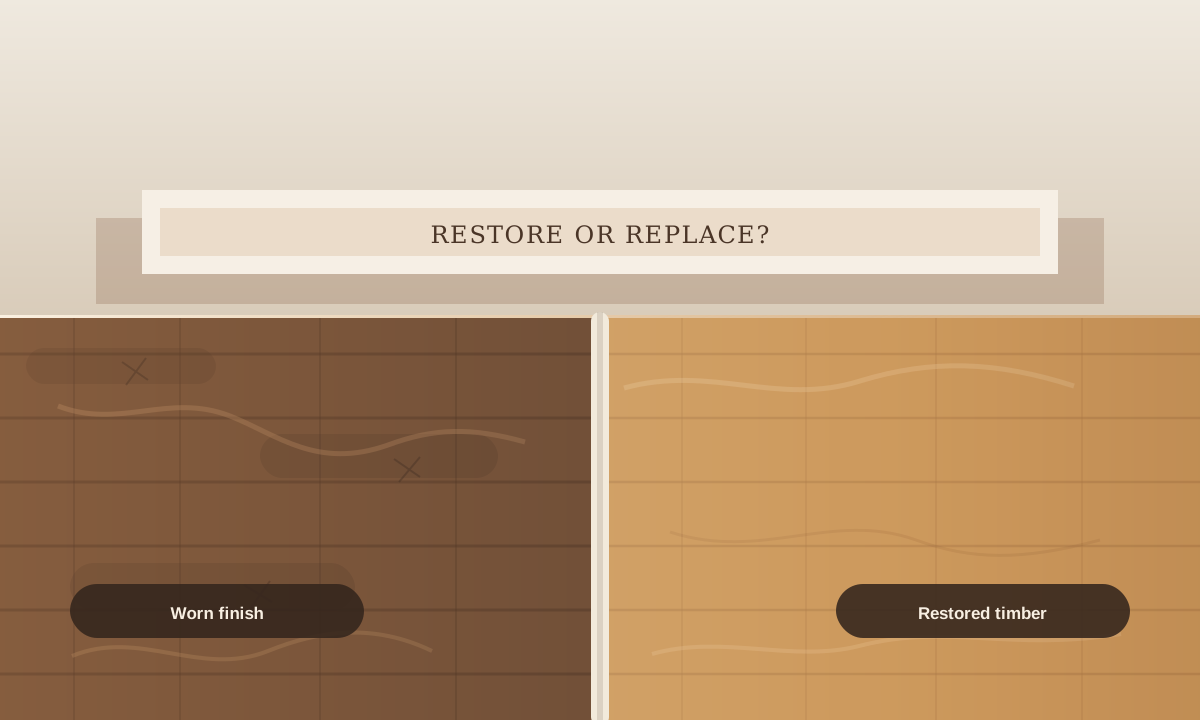
Many wooden floors can be restored successfully, even when they look tired, scratched or badly worn at first glance. Surface damage can be dramatic, but it does not always tell the full story.
Worn finishes, visible scratches, patchy colour, old coatings, staining, gaps, loose boards and parquet issues are all common reasons homeowners start thinking about replacement. In many cases, these problems can be improved through assessment, repairs, sanding and refinishing.
Appearance alone rarely determines whether a floor must be replaced. A floor can look dull, dirty or uneven while the timber underneath remains sound. Equally, a floor can look reasonably tidy on the surface while hiding more serious movement, moisture or structural problems below.
The starting point is usually the condition of the timber and the structure. If the boards or blocks are stable, dry and thick enough for the proposed work, restoration may still be a sensible option.
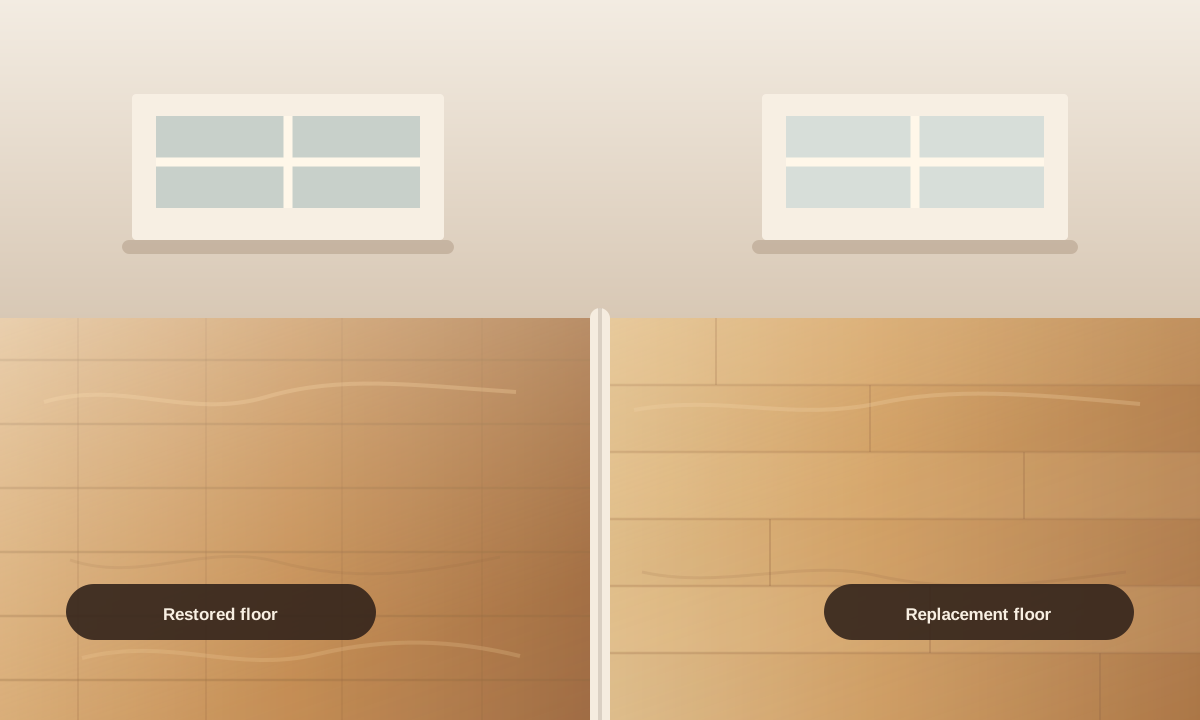
This is why an honest assessment matters. The aim is not to push restoration when replacement would be more practical, but to avoid replacing a floor that could be repaired and restored well.
Signs a floor may still be worth saving
A floor may still be worth saving if the timber is sound, the structure is stable and the damage is mainly cosmetic or localised. Worn lacquer, surface scratches, dull traffic lanes, minor staining and old varnish often look worse than they are.
Stable boards are a positive sign. If the floor feels firm underfoot and there is no widespread movement, restoration may be possible even where the surface looks heavily worn.
Localised issues are often repairable. A few damaged boards, isolated parquet movement, small sections of staining or gaps around thresholds do not automatically make the whole floor unsuitable for restoration.
A floor with original character can also be worth investigating carefully. Period floorboards, oak strip floors and parquet patterns are often difficult to replicate with modern replacement materials.
Our guide is my wooden floor worth restoring explains how to judge restoration potential before assuming the floor has reached the end of its useful life.
Even when a floor needs repairs first, restoration can still be the most balanced route if the core timber is sound and the repair work is proportionate.
Structural problems that may require replacement
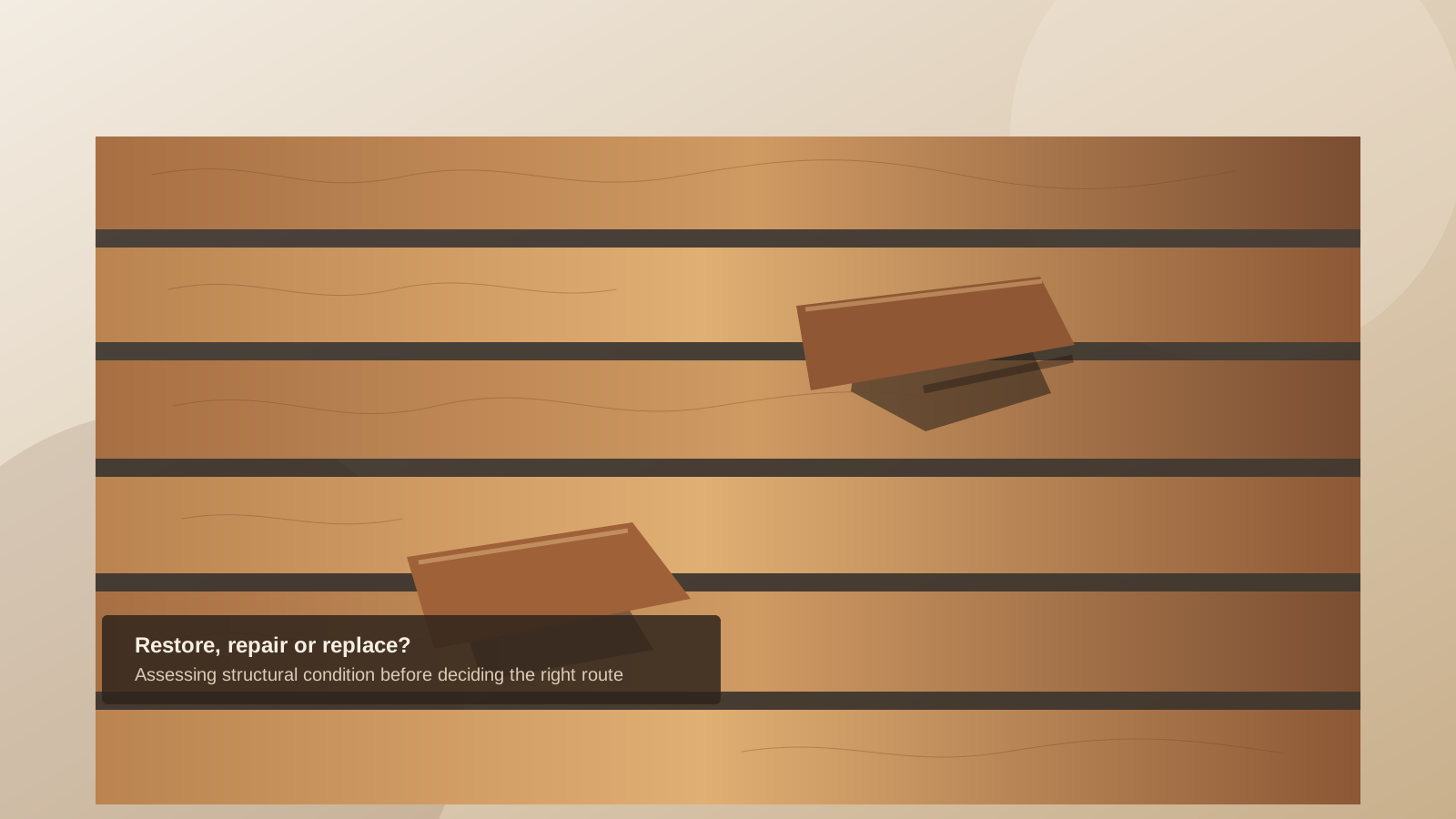
Replacement becomes more likely when the problem is structural rather than cosmetic. Severe rot, widespread instability, major timber failure and unsafe flooring need to be treated differently from surface wear.
A floor that flexes heavily, feels soft underfoot or has large areas of failed timber may not provide a reliable base for sanding or finishing. In those cases, simply improving the surface would not solve the underlying issue.
Extensive structural movement can also make restoration impractical. If boards are no longer properly supported, if joists or subfloor areas are affected, or if sections are unsafe to walk on, the floor may need construction work before any finish is considered.
These situations are less common than many homeowners expect, but they do occur. Older homes, long-term leaks, neglected damp problems and badly altered floors can all create conditions where replacement becomes the more sensible option.
Replacement should not be seen as a failure. Sometimes it is the honest answer because it gives the home a safer, more stable floor for the future.
Water damage and timber failure
Water damage is one of the main reasons homeowners worry that a wooden floor needs replacing. The important point is that not all water damage has the same outcome.
Short-term or localised water exposure may leave staining, cupping, lifting or finish damage that can sometimes be repaired after the floor has dried and stabilised. Individual boards or parquet blocks may need attention, but the whole floor may not necessarily need replacing.
Prolonged saturation is different. If water remains in the floor for a long period, timber can swell, distort, soften or begin to decay. Adhesives may fail, parquet can lift, and engineered floors can delaminate.
Severe swelling, decomposition, widespread deterioration and unsafe timber are stronger signs that replacement may be needed. Even then, the extent of the affected area matters. Some floors need localised replacement rather than complete removal.
Our guide to water damaged wooden floors explains the difference between repairable moisture damage and more serious timber failure.
Engineered flooring limitations
Engineered wood flooring needs a slightly different assessment from solid timber. The visible surface is real wood, but it sits over construction layers beneath.
Very thin wear layers can limit restoration. If there is not enough usable hardwood on top, full sanding may be risky or unsuitable. Previous sanding history also matters because each sanding removes some of that wear layer.
Severe delamination is another concern. If the layers of an engineered board have started separating, sanding the surface will not correct the failed construction beneath.
Moisture can be particularly problematic for some engineered floors. Swelling, lifting boards, failed joints or widespread instability may point towards replacement if the floor can no longer perform as a stable system.
That said, engineered floors should not be dismissed automatically. Professional engineered wood floor restoration starts by assessing the wear layer, condition, movement and likely safest route.
Repair versus replacement
There is a large middle ground between “restore everything” and “replace everything”. Many floors need repair work before sanding or finishing, but that does not necessarily mean replacement is the best option.
Loose boards can often be secured. Damaged boards can sometimes be replaced locally. Missing sections may be repaired with suitable timber. Threshold problems, gaps and isolated movement can often be addressed as part of the preparation stage.
Wood floor repairs are especially useful where most of the floor is sound but specific areas need attention. Repairing these areas first gives any restoration work a better foundation.
Parquet flooring is a good example. Loose blocks, missing blocks or failed adhesive can look serious, but many parquet floors can be stabilised and restored if the timber and subfloor remain suitable.
Parquet floor restoration often combines block repairs, sanding and finishing. This can preserve the original pattern and character where replacement would remove both.
Replacement becomes more likely when repair work would be so extensive that it no longer represents sensible value, or when the floor cannot be made stable enough for long-term use.
How professionals assess flooring
A professional assessment looks beyond the surface. The main questions are whether the floor is structurally sound, whether there is enough usable timber, whether the floor is stable, and whether moisture or previous work has limited the restoration options.
Timber thickness matters because sanding removes material. This is especially important on older boards that may have been sanded before and engineered floors with a limited wear layer.
Stability is just as important. Loose boards, moving parquet, soft areas and unstable subfloors need to be understood before any sanding or finishing is recommended.
Moisture issues must also be considered. If a floor is still damp, recently flooded or affected by an unresolved leak, restoration should not be treated as a simple surface job.
Photos are often a useful first step. Clear images of the full room, damaged areas, edges, thresholds, loose boards and any staining can help us advise whether restoration, repair, closer inspection or replacement is likely to be most sensible.
You can send us photos through the quote form. In some cases, photos are enough for initial guidance; in others, a closer inspection is the more responsible route.
Quick decision guide
Use this as a practical starting point. Every floor is different, but these examples show how visible damage and structural condition can lead to different recommendations.
Frequently Asked Questions
How do I know if my floor needs replacing?
A floor may need replacing if there is severe rot, widespread instability, unsafe timber, major water damage or construction failure that cannot be repaired sensibly.
Can old floorboards be restored instead of replaced?
Often, yes. Old floorboards can frequently be restored if the timber is sound, stable and thick enough for the proposed work.
Can water damaged floors be saved?
Some water damaged floors can be repaired and restored after drying. Severe rot, delamination or widespread timber failure may make replacement more appropriate.
When is parquet flooring beyond repair?
Parquet may be beyond practical repair if there is severe structural failure, widespread timber decay, major subfloor problems or extensive instability across the floor.
Can engineered flooring be replaced in sections?
Sometimes, depending on the product, installation method and availability of matching boards. In other cases, wider replacement may be needed.
Should I restore or replace my floor?
The best choice depends on timber condition, stability, repair requirements, floor type, budget and the result you want. Photos can often help with initial advice.