
How do you tell if a floor can be saved?
Age alone does not decide whether a wooden floor can be saved. Some very old floors restore beautifully because the timber is still sound, while newer floors can be poor candidates if they are unstable, rotten or too thin.
The first question is structural condition. Boards or blocks should feel reasonably firm underfoot, without widespread bounce, movement or soft areas. Local problems can often be repaired, but widespread instability needs closer investigation.
Timber thickness matters too. A floor needs enough usable material for sanding and preparation. Original boards and solid hardwood floors often have more restoration potential than they first suggest, although previous sanding history can reduce what remains.
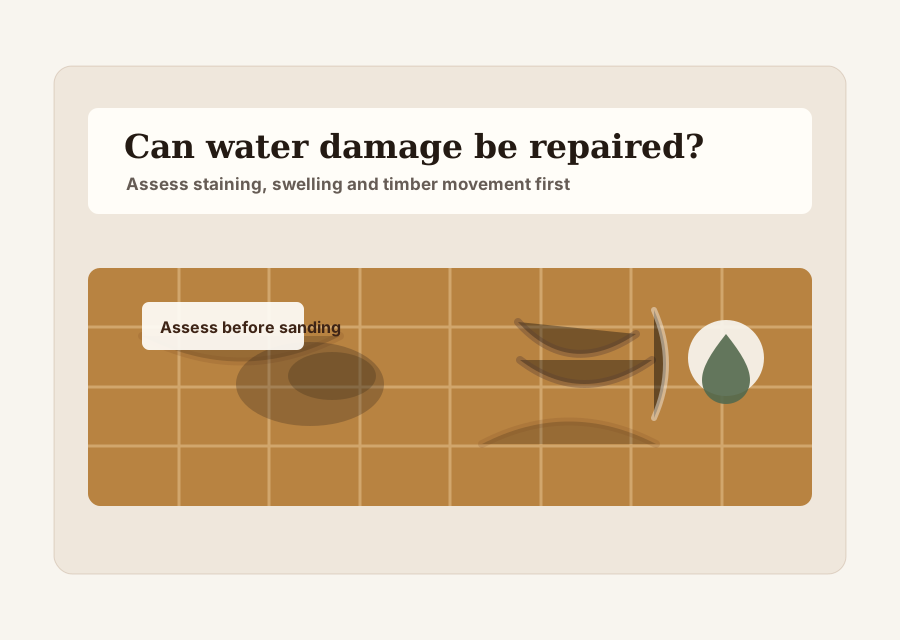
Moisture damage is another important factor. Staining, cupping, swelling and black marks do not automatically mean replacement, but they do need proper assessment. The source of moisture should also be understood before restoration is recommended.
Previous repairs, old filler, historic coatings and unknown sanding history can all influence the plan. Many floors that look heavily worn are still structurally sound, but the safest decision comes from looking at the timber, movement and damage together.
Common problems that look worse than they are
Old wooden floors often look dramatic when first uncovered. Scratches, worn finishes, faded colour, old varnish, surface staining, minor gaps and general dirt can make a floor appear beyond repair.
In many cases, these issues affect the surface rather than the structure. A dark, orange or patchy varnish can hide good timber underneath. Heavy traffic lanes can look grey and tired because the protective coating has worn away, not because the floor has failed.
Surface scratches can often be reduced through sanding and refinishing. Minor gaps may be manageable, especially in older floorboards where some movement is part of the character of the property.
Staining needs more caution. Some marks sit near the surface and improve during restoration. Others go deeper into the timber and may remain visible or require local repair. The important thing is not to assume every mark means replacement.
A floor that looks dusty, uneven and tired may still be a strong restoration candidate if the boards or blocks are stable. This is why old floors should usually be assessed before being covered or removed.
What types of old floors can be restored?
Different old floors have different restoration potential. The construction, timber species, previous work and condition all matter.
Original Pine Floorboards
Original pine floorboards are common in older homes and are often worth assessing before replacement. They can carry dents, nail marks, gaps and staining, but they also have warmth and character that modern replacement flooring may not replicate.
Pine is softer than oak, so historic wear is normal. Restoration may involve repairs, careful sanding, filling where appropriate and a protective finish. The result can be clean and practical while still retaining the feel of an older floor.
Oak Floors
Old oak floors are often strong restoration candidates if enough timber remains. Oak usually responds well to sanding and refinishing, and it can suit natural, matt, satin or stained finishes.
The main concerns are deep staining, movement, previous sanding and worn-through areas. If the structure is sound, restoration can often bring back depth, colour and protection.
Parquet Flooring
Old parquet can look especially worrying when blocks are loose, dull or uneven. However, parquet is frequently worth saving because the pattern and original timber are part of the character of the floor.
Parquet floor restoration often includes lifting and refixing loose blocks, replacing missing pieces where possible, sanding and refinishing. Herringbone, block and finger parquet can all have strong restoration potential when the base is stable.
Hardwood Floors
Hardwood strip or plank floors can often be restored if there is enough thickness and the timber remains stable. Scratches, worn finish and dull colour are usually more encouraging signs than rot, movement or severe water damage.
Older hardwood floors can be very rewarding to restore because sanding and finishing often reveal colour and grain that have been hidden beneath old coatings.
When repairs are usually possible
Repair work is often part of a successful restoration project. A floor does not need to be perfect before restoration starts; it needs to be repairable and stable enough for the chosen process.
Loose boards can often be secured. Damaged sections may be replaced or repaired locally. Missing parquet blocks can sometimes be matched or blended, especially where the surrounding floor remains sound.
Threshold problems are also common in older homes. Doorways, fireplaces, extensions and previous room alterations can leave awkward gaps or changes in level. These details often need attention before sanding and finishing.
Localised water damage may be repairable, depending on how far the moisture has travelled and whether the timber has distorted, softened or stained deeply. Small affected areas are very different from widespread saturation.
Wood floor repairs provide the foundation for the final result. Repairing movement, damaged sections and problem edges before finishing usually gives a more durable and balanced restoration.
When replacement may be necessary
Some old wooden floors cannot be sensibly saved. Severe rot, unsafe timber, widespread structural failure and major water damage can make replacement the more responsible recommendation.
If boards are soft, crumbling or structurally unsafe, sanding and finishing will not solve the underlying problem. The same applies where large areas are moving, collapsing or affected by ongoing moisture.
Widespread failure is different from local damage. One damaged board, a small stained patch or a few loose parquet blocks may be repairable. A floor that has failed across a whole room needs a different conversation.
Previous work can also limit restoration. If a floor has been sanded too aggressively in the past, there may not be enough usable timber left for another full sanding. In that situation, lighter restoration or replacement may need to be considered.
These cases are generally less common than many homeowners expect, but they do happen. Good advice should explain both the restoration potential and the reasons replacement may be more sensible.
Why restoration is often worth considering
Restoration is often worth considering because old wooden floors are not just surface coverings. In many homes they are part of the building, its age and its character.
Keeping original materials can preserve the feel of a period property. Pine boards, oak strip floors and parquet patterns often carry details that would be expensive or difficult to recreate with new products.
Restoration can also reduce waste. Rather than removing usable timber and replacing it with new flooring, the existing floor can sometimes be repaired, sanded and protected for continued use.
In many situations, restoration also avoids some of the disruption of replacement. There is no need to remove the whole floor, dispose of it, select a new product and refit from scratch if the existing timber is sound.
That said, restoration is not always the better choice. The decision should consider condition, repair requirements, cost, desired appearance and long-term practicality.
Where sanding is appropriate, dustless floor sanding can remove worn coatings and prepare the timber for a new protective finish. Where the finish is dull but the timber is still in good condition, sandless wood floor restoration may also be worth discussing.
Photos that help us assess old floors
Clear photos can often help us give useful early advice. They do not replace every on-site assessment, but they can show whether a floor looks like a possible restoration candidate.
Useful photos include a full room image, close-ups of damaged areas, scratches, staining, gaps, old repairs and any loose sections. If the floor is parquet, include the pattern, edges, thresholds and any blocks that have lifted.
For floorboards, photograph gaps, split boards, nail areas and sections that feel loose underfoot. If there has been water damage, show the affected area and the likely source if known.
It also helps to explain what you would like to achieve. Some homeowners want the floor to look as clean and modern as possible, while others want to retain age and character.
You can send us photos through the quote form. We can usually advise whether restoration, repairs, sanding or replacement appears most sensible as a next step.
Quick decision guide
This guide gives a starting point for thinking about old wooden floors. A proper assessment is still needed before making final decisions, especially where water, movement or structural concerns are involved.
Frequently Asked Questions
Can very old wooden floors be restored?
Yes, many very old wooden floors can be restored if the timber is structurally sound, stable and has enough usable material for sanding or restoration.
Can old pine floorboards be saved?
Old pine floorboards can often be saved with repairs, sanding and finishing. Suitability depends on board condition, previous sanding, gaps, staining and stability.
Can damaged parquet flooring be repaired?
Many damaged parquet floors can be repaired, especially where loose or missing blocks are localised and the subfloor remains stable.
How do I know if my floor is worth restoring?
A floor is worth assessing if the timber feels firm, the damage appears mainly surface-level and there are no obvious signs of severe rot or structural failure.
Is restoration cheaper than replacement?
Restoration is often more cost-effective than replacement when the existing timber is sound, but repair needs, floor type and desired finish all affect the final cost.
When should a floor be replaced instead?
Replacement may be more sensible where timber is rotten, unsafe, severely water damaged, structurally unstable or too thin for further restoration.