First, what condition is the floor in?
The starting point is not simply how old the floor is. Older timber can often be restored beautifully, while a newer floor may have limitations if it is engineered, badly fitted or already heavily worn.
Look closely at the condition of the surface. A dull or patchy finish, light surface scratches, grey wear marks, black staining, loose blocks or boards, gaps, old coatings, water damage and uneven colour all point towards different solutions. Previous sanding history matters too, especially on thinner floors.
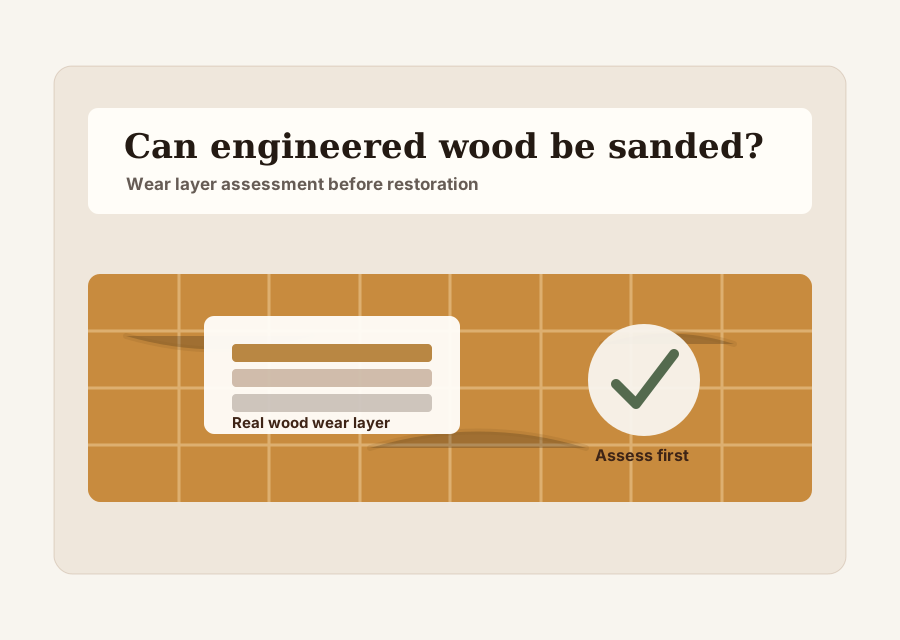
With engineered wood, the real wood wear layer is especially important. Some engineered floors can be lightly restored or carefully sanded, while others do not have enough timber left to work with safely.
When full sanding is the right choice
Full sanding is usually the right choice when the wear or damage sits deeper than the existing surface finish. If you can see visible scratches, traffic lanes, worn-through lacquer or oil, old coatings, uneven colour or staining, the floor normally needs more than a light refresh.
Sanding removes the tired top surface of the timber and creates a properly prepared base for a new protective finish. It is also usually needed if you want to change the colour with stain, remove old finish build-up, re-level the surface, or prepare the floor for a new lacquer, oil or hardwax oil.
WoodXpert uses dustless wood floor sanding systems designed to control dust during the process. Modern dust-controlled equipment makes the work cleaner and more practical for homes and commercial spaces.
When sandless restoration may be enough
Not every wooden floor needs full sanding. If the floor looks dull but the finish is mostly intact, sandless wood floor restoration may be enough to improve the appearance and renew protection.
This approach can suit floors with loss of sheen, light surface marks, general ageing or traffic dulling where the timber itself is not badly damaged. It can also be a useful lower-disruption option where the existing finish is compatible and the aim is maintenance rather than a full reset.
It is important to be realistic. Sandless restoration will not remove deep scratches, black staining, severe finish failure or major wear through to bare timber. In those situations, sanding or repair work is usually the more appropriate route.
When repairs are needed first
Some floors need stabilising before sanding, restoration or finishing. Loose parquet blocks, gaps, damaged boards, missing sections, threshold problems, movement, cracked boards and old filler failure should be assessed before the final finish is planned.
Good repair work gives the final finish a better foundation. If a floor is moving, loose or uneven, simply applying a new finish over the top can leave the underlying problem in place.
WoodXpert carries out wood floor repairs as part of the restoration process. For herringbone, block or mosaic floors, parquet floor restoration may involve individual block repairs, gap management and careful sanding to preserve the original pattern.
When replacement may be the better option
A good restoration company should be willing to say when restoration is not the best route. Some floors are too damaged, unstable or limited to justify the work.
Replacement may be more sensible where timber is rotten, boards are structurally unsafe, an engineered floor wear layer is too thin, the floor has been sanded too many times, water damage has caused severe distortion, or large areas are missing and unstable.
There are also cases where repair costs would be disproportionate compared with replacement. WoodXpert will explain honestly when sanding or restoration is suitable and when another option would be more sensible.
How floor type affects the decision
The type of wooden floor has a big influence on the safest restoration method. A solid pine floorboard, an oak strip floor, a parquet floor and an engineered board can all need different treatment.
Original pine floorboards
Original pine floorboards are often restorable and full of character. They may have gaps, nail holes, old stains or damaged sections, so repairs and filling are often needed before sanding and finishing.
Oak and hardwood floors
Oak and hardwood floors are usually strong candidates for sanding and restoration if enough timber remains. They can respond very well to careful preparation, fine sanding and the right protective finish.
Parquet floors
Parquet floors are often worth restoring because the original pattern and character are difficult to replicate. Loose blocks, adhesive failure and gaps may need attention before sanding and refinishing.
Engineered wood floors
Engineered floors depend on the thickness of the real wood wear layer. Some can be lightly sanded or restored, while others cannot safely be sanded. A careful engineered wood floor restoration assessment helps avoid removing more timber than the floor can tolerate.
Photos that help us advise
Photos are extremely useful before quoting because they help us understand the floor type, the finish, the level of wear and any repairs that may be needed. You can send us photos for advice through the quote form.
The most useful photos are a full-room photo, close-ups of scratches or worn areas, door thresholds, edges and corners, loose blocks or gaps, black marks or water damage, and any labels or product details if the floor is engineered.
Photos do not replace every inspection, but they often give enough information to explain whether sanding, sandless restoration, repair work or replacement is likely to be the right direction.
Quick decision guide
Use this as a starting point. Every floor still needs proper assessment, but these common signs usually point towards one of the main options.
Frequently Asked Questions
Does every tired wooden floor need sanding?
No. Some floors only need sandless restoration or a maintenance refresh, especially if the finish is dull but the timber underneath is still sound.
Can photos help you tell what my floor needs?
Yes. Clear photos of the full room, worn areas, edges and any damage usually help us advise whether sanding, restoration, repairs or inspection is the best next step.
Can deep scratches be removed without sanding?
Light surface marks may improve with restoration, but deep scratches usually need sanding if they have gone through the finish into the timber.
Is sandless restoration the same as sanding?
No. Sandless restoration is a lower-disruption refresh for suitable floors. Full sanding removes more of the old surface and is better for deeper wear, staining or colour changes.
Can engineered wood floors be sanded?
Some engineered wood floors can be sanded or lightly restored, but it depends on the thickness of the real wood wear layer and the condition of the floor.
Will you tell me if my floor is not worth restoring?
Yes. If replacement is more sensible because the floor is unsafe, rotten, over-sanded or too badly damaged, we will explain that before recommending work.