Why parquet flooring is different
Parquet flooring is different from many modern floor coverings because it is usually made from individual timber blocks arranged in a deliberate pattern. That pattern is part of the floor’s value.
Traditional herringbone parquet, finger parquet, mosaic parquet and block parquet all have a character that can be difficult to replicate economically with new materials.
Many parquet floors are hardwood, which means the timber itself may still have strong restoration potential even when the finish looks tired. Worn lacquer, dull colour, surface scratches and loose blocks can make a floor look worse than it really is.
Parquet is also repairable in a way that many other floors are not. Individual blocks can often be lifted, reset or replaced locally, depending on condition and subfloor suitability.
This is why restoration is often considered before replacement. The value is not only in the finished appearance, but in preserving original timber, craftsmanship and pattern.
What restoration usually involves
Parquet restoration is often more comprehensive than a simple sand and lacquer. The first stage is assessment: checking the condition of the blocks, the subfloor, movement, gaps, previous finishes and any areas needing repair.
Repair work may be needed before sanding. Loose blocks may need lifting, cleaning and resetting. Missing or badly damaged blocks may need replacement where suitable material is available.
Parquet floor restoration typically combines stabilising the floor, sanding the surface carefully and applying a protective finish that suits the timber and room.
Where wider repairs are needed, wood floor repairs can form part of the preparation stage. This gives the restored finish a better foundation.
Once the parquet is stable, dustless floor sanding can remove the worn surface and prepare the timber for lacquer, oil, hardwax oil or a chosen colour treatment.
The final finish matters because it protects the investment. A well-chosen finish improves appearance, makes the floor easier to maintain and helps preserve the restored surface for longer.
When restoration offers good value
Parquet restoration often offers good value when the floor is structurally sound and the main issues are cosmetic wear, faded appearance, loose blocks or localised damage.
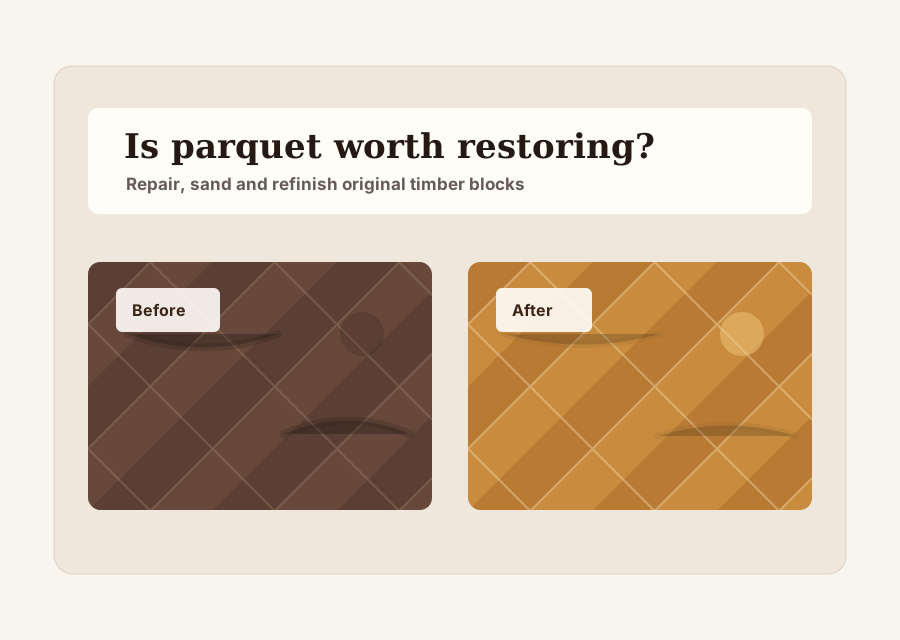
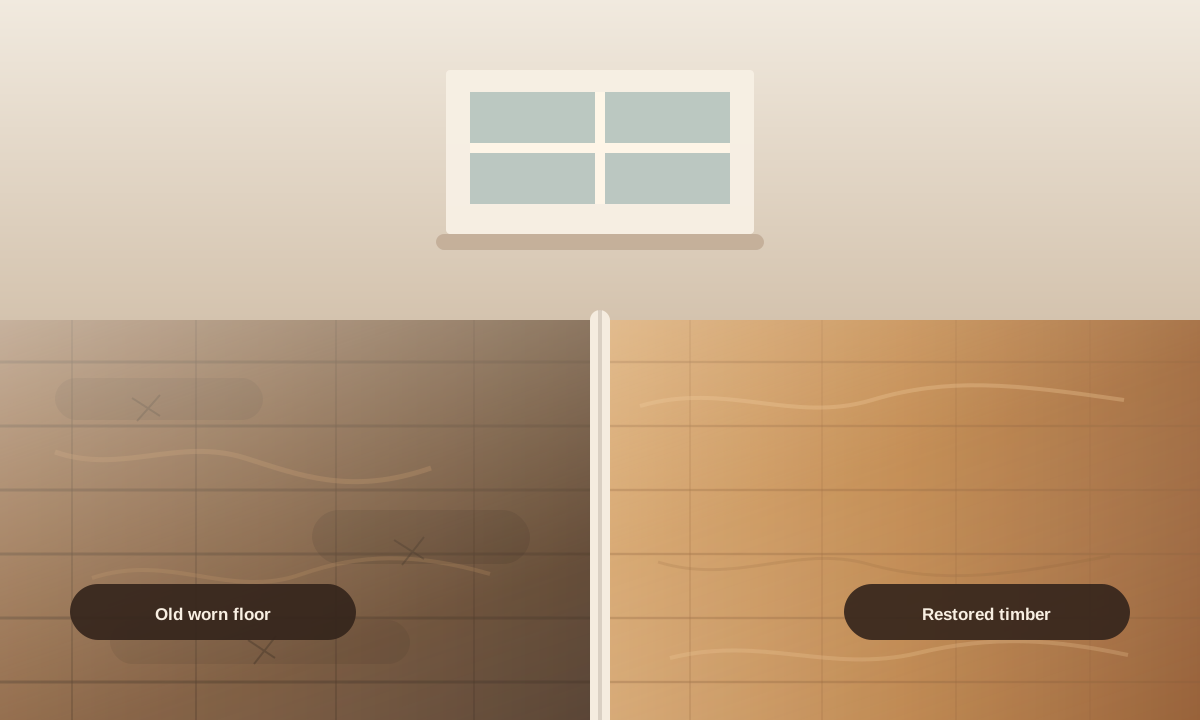
A floor with worn lacquer can look flat, grey or patchy, but the timber underneath may still be strong. Once the old finish is removed and the surface is prepared, the original pattern can return with far more depth and warmth.
Loose blocks do not automatically make restoration poor value. If movement is localised and the subfloor is suitable, repair work can stabilise the parquet before finishing.
Historic parquet can be especially worth preserving. Original timber and period patterns contribute to the character of a home in a way that replacement flooring may not.
Restoration can also reduce waste. Instead of removing a timber floor and sending material to disposal, the existing parquet is repaired and protected for continued use.
The strongest value case is usually a floor that looks tired but remains fundamentally sound. These are often the projects where restoration creates the most dramatic improvement.
Restoration versus replacement
Replacement is not just the cost of buying new flooring. It often involves removal, disposal, subfloor preparation, new materials, installation and finishing. Those stages can add cost, disruption and time.
Restoration frequently avoids many of those stages because the existing timber remains in place. The work focuses on stabilising, sanding and refinishing what is already there.
That does not mean restoration is always cheaper or always better. If the existing parquet is severely unstable, rotten or missing in large areas, replacement may be more sensible.
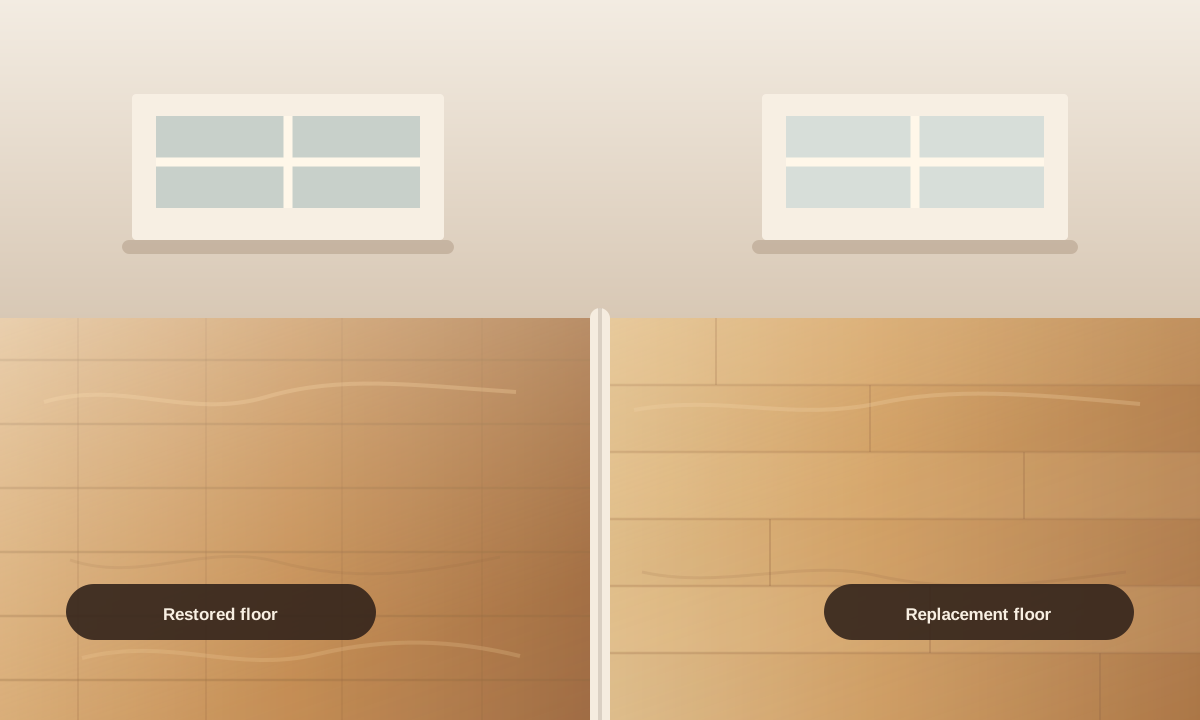
Replacement can also change the feel of a room. New flooring may be attractive, but it may not reproduce the depth, pattern variation or period character of an older parquet floor.
For many floors, though, the comparison is not simply “old versus new”. It is original hardwood parquet with character versus the full cost and disruption of removing and replacing it.
Our guide to floor sanding versus replacement explains how restoration and replacement compare across cost, disruption, waste and long-term value.
When restoration may not be worthwhile
A trustworthy restoration company should also explain when restoration may not be the best route. Some parquet floors genuinely reach a point where replacement is more sensible.
Severe structural failure is one example. If large areas of the floor are unstable, unsupported or moving because of a failed subfloor, the problem may be deeper than the parquet surface.
Extensive water damage can also change the equation. Blocks may swell, distort, lift or decay if moisture has affected the timber or adhesive for a long period.
Significant timber loss is another factor. If large sections are missing, badly damaged or impossible to match, repair costs may become disproportionate.
Widespread instability, rotten timber and failed previous repairs all need careful assessment. In some cases, local repair remains possible; in others, replacement may provide better long-term value.
Being honest about these limits protects the homeowner. Restoration is worthwhile when it produces a stable, attractive and practical floor, not simply because it is technically possible.
Factors that affect restoration costs
Parquet restoration costs vary because parquet floors vary. Room size matters, but floor condition often has a bigger impact than area alone.
Repair requirements are a major factor. A stable parquet floor with worn finish is usually more straightforward than one with many loose blocks, missing sections or failed adhesive.
Parquet type also matters. Herringbone, finger parquet, mosaic parquet and block parquet can require different levels of care, especially when repairs or replacement blocks are involved.
Matching replacement blocks can also affect the time and care required.
Finish selection affects the final specification. Stain colours, lacquer systems, oils and hardwax oils all have different preparation and application requirements. Staining and finishing choices should support both appearance and durability.
Access, furniture, thresholds, room layout and drying times can also influence the work involved.
A useful quote should therefore explain the likely work involved rather than giving a vague square-metre figure with no context. Repairs, preparation and finish choice all affect the value of the finished result.
It is better to avoid fixed assumptions from a distance. Our guide to wood floor sanding cost explains why quotes vary and what information helps produce a realistic price.
Real-world parquet examples
Real parquet projects often show why cost and value need to be considered together. A floor can look heavily worn, uneven or dated before restoration but still have strong timber underneath.
The Finger Parquet Floor Restoration In Peterlee is a useful example of parquet that benefited from careful assessment, preparation and refinishing. The restoration retained the pattern and character rather than replacing the floor.
Herringbone parquet can be especially rewarding to restore because the pattern is such a strong visual feature. WoodXpert’s Newcastle herringbone parquet work, shown in the project library, demonstrates how much character can return once worn finish and surface dullness are addressed.
In both cases, the point is not that every parquet floor should be restored. The point is that many floors deserve proper assessment before replacement is assumed.
A parquet floor with original timber, repairable movement and enough usable surface can often deliver excellent long-term value when restored properly.
Quick decision guide
Use this guide as a starting point. The best route still depends on the condition of the blocks, subfloor, repair requirements and the result you want.
Frequently Asked Questions
Is parquet restoration worth the cost?
Often, yes, especially when the parquet is structurally sound, repairable and made from good timber. The value comes from preserving the original floor as well as improving appearance.
Is it cheaper to restore or replace parquet flooring?
Restoration is often more economical than full replacement, but not always. The answer depends on repair requirements, floor condition, replacement materials and installation costs.
Can loose parquet blocks be repaired?
Yes. Loose parquet blocks can often be lifted, cleaned, reset and stabilised before sanding and finishing, depending on the block and subfloor condition.
Can old parquet floors be saved?
Many old parquet floors can be saved if the timber is sound and the floor can be stabilised. Heavy wear alone does not automatically mean replacement is needed.
How long does parquet restoration last?
Longevity depends on the finish system, traffic levels, cleaning routines and maintenance. A restored parquet floor can provide long service when cared for properly.
When should parquet be replaced?
Replacement may be more sensible if there is severe structural failure, extensive water damage, widespread instability, rot or major timber loss.