Why there is no universal answer
Many websites give fixed answers to the question of how many times engineered flooring can be sanded. Those simple rules are tempting, but they can be misleading because engineered floors vary significantly from one product to another.
Two boards can look almost identical from above while being built very differently underneath. One may have a thin decorative wear layer with very limited restoration potential. Another may have a thicker hardwood layer that can tolerate careful sanding when the floor is stable and has not already been overworked.
Installation quality also matters. A well-fitted floor with stable boards gives more options than a floor with movement, moisture problems or delamination. Previous restoration history matters too, because every sanding process removes some of the real wood surface.
This is why professional assessment is more reliable than a broad rule of thumb. The question is not simply whether the floor is engineered, but how much usable hardwood remains and whether sanding is the safest route.
Understanding wear layers
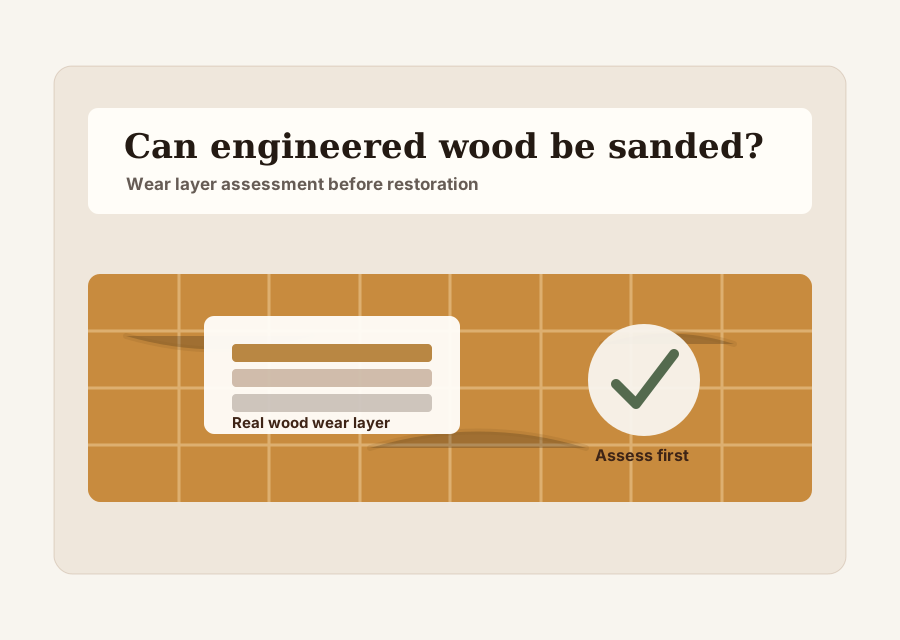
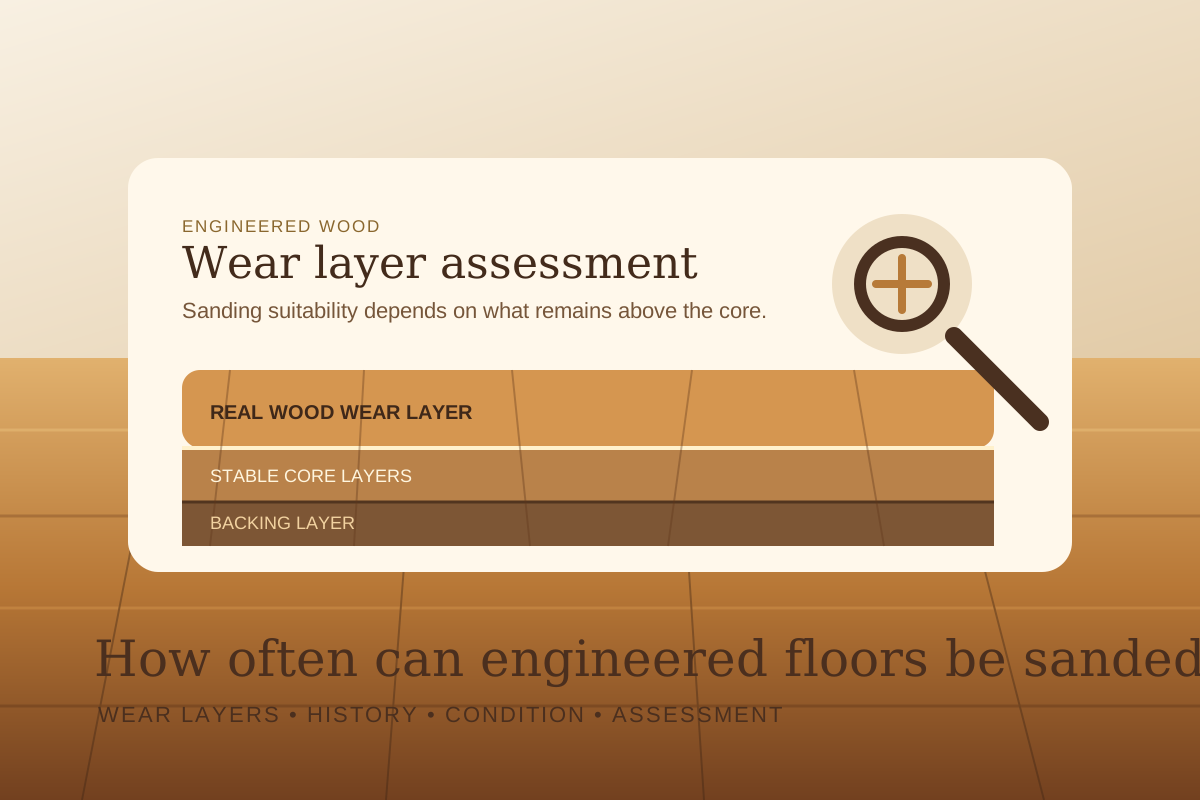
The wear layer is the real hardwood layer on top of an engineered board. It is the visible timber surface and the part that determines whether sanding may be possible. Beneath it are core layers that provide stability but are not designed to be sanded as the finished surface.
This is the main difference between engineered flooring and solid timber flooring. A solid board is timber all the way through, although even solid boards have practical sanding limits. An engineered board has only a certain amount of real hardwood on top, so sanding decisions need to be more cautious.
Some engineered floors have very thin wear layers. Others have medium wear layers that may allow light restoration if the condition is good. Premium engineered floors may have thicker wear layers, but previous sanding, scratches, moisture and board stability still affect the decision.
The wear layer is one of the most important factors, but it is not the only one. A floor with a decent wear layer can still be unsuitable if it is unstable, delaminating or badly water damaged.
What affects sanding suitability?
Sanding suitability depends on several factors working together. Wear layer thickness is important, but so is floor condition, moisture history, board stability, previous repairs, deep scratches, staining and whether the boards are still properly bonded.
A floor with light finish wear and stable boards may be a good candidate for careful restoration. A floor with deep scratches, swelling, lifting edges or exposed substrate needs a more cautious assessment.
Moisture damage can change the picture quickly. Engineered boards can sometimes delaminate when water has affected the bonding between layers. If the layers are separating, sanding the surface will not solve the structural issue beneath.
WoodXpert provides engineered wood floor restoration advice before recommending sanding. In some cases sanding is sensible. In others, a lower-intervention refresh or localised repairs may protect the floor better.
Previous sanding history
Previous sanding history is one of the hardest things for homeowners to know, especially after moving into a property. A floor may look like it has plenty of life left, but if it has already been sanded aggressively before, there may be less wear layer remaining than expected.
Every sanding removes material. A careful professional sanding removes as little as practical while still preparing the floor properly, but it still reduces the real wood surface. The more times a floor has been sanded, the more cautious the next restoration decision becomes.
Inherited properties, older renovations and floors fitted by previous owners can make assessment more difficult because product information may be missing. Spare boards, exposed edges, thresholds, heating pipe openings or manufacturer details can sometimes help identify the construction.
Where the history is unknown, WoodXpert will usually advise cautiously. Preserving the remaining wear layer is more important than forcing a sanding process that may shorten the floor’s life.
Signs sanding may still be possible
There are signs that an engineered floor may still have restoration potential. They do not prove sanding is suitable, but they can indicate that careful refinishing may be worth assessing.
Signs sanding may not be suitable
Some engineered floors are better left unsanded. Warning signs include exposed substrate, severe delamination, lifting boards, very thin wear layers, major water damage, structural instability or deep damage that appears to go beyond the usable hardwood surface.
If the core material is visible, sanding is unlikely to be appropriate because the real wood layer has already been breached. If the floor is lifting or separating, the problem is not just cosmetic. The construction of the board or the installation may have failed.
Very thin wear layers are another limitation. Even if the floor looks restorable from above, sanding may risk breaking through the hardwood layer. Once that happens, the floor can be permanently damaged.
These situations do not always mean the entire floor must be replaced immediately. Localised repairs, compatible restoration methods or a maintenance refresh may still improve appearance, but full sanding may not be the safest option.
Alternatives to sanding
Not every engineered floor requires full sanding to improve its appearance. If the timber is mostly sound and the main issue is dullness, light surface wear or finish deterioration, sandless wood floor restoration may be a better option.
A maintenance refresh can improve sheen, renew protection and extend the life of a suitable floor without removing the same amount of timber as sanding. This can be useful where the wear layer is limited but the floor is otherwise stable.
Localised repairs may also be possible where thresholds, damaged boards or isolated areas are causing problems. In some cases, replacement of individual boards or a section of flooring may be more sensible than sanding the entire room.
Where the floor is too thin, unstable or badly damaged, replacement may be the honest recommendation. A trustworthy assessment should explain the options rather than automatically pushing sanding.
Photos that help us assess engineered flooring
Clear photos can often help us give useful initial advice before a visit. The most helpful images show the full room, close-ups of scratches, worn areas, edges, thresholds, board ends and any areas that look swollen, lifted or stained.
If you have product information, spare boards, packaging labels or installation details, include those too. An underside view of a spare board can be particularly helpful because it may show the construction and thickness of the hardwood layer.
Photos of door thresholds, pipe openings or exposed edges can also help because they sometimes reveal the board profile. This can give clues about whether sanding is likely to be safe.
You can send us photos through the WoodXpert quote form. We can usually advise whether sanding, sandless restoration, repairs or a closer inspection is likely to be the most sensible next step.
Frequently Asked Questions
How many times can engineered flooring be sanded?
There is no universal number. It depends on the wear layer thickness, previous sanding history, floor condition and how much timber can be safely removed.
What is a wear layer?
The wear layer is the real hardwood surface on top of an engineered board. Its thickness is one of the main factors in deciding whether sanding may be possible.
Can engineered flooring be restored without sanding?
Yes, some engineered floors can be improved with sandless restoration, maintenance refreshes or compatible finish renewal if the timber is stable and not badly damaged.
What happens if the wear layer is too thin?
If the wear layer is too thin, sanding may expose the core beneath and permanently damage the floor. Alternative restoration or replacement may be more sensible.
Can deep scratches be removed from engineered flooring?
Deep scratches may require sanding, but sanding is only safe if enough wear layer remains. If scratches go too deep, local repairs or replacement boards may be needed.
How do I know if my floor can still be sanded?
Send photos of the room, worn areas, edges, thresholds and any product information. Professional assessment is the safest way to judge sanding suitability.