What happens during parquet restoration?
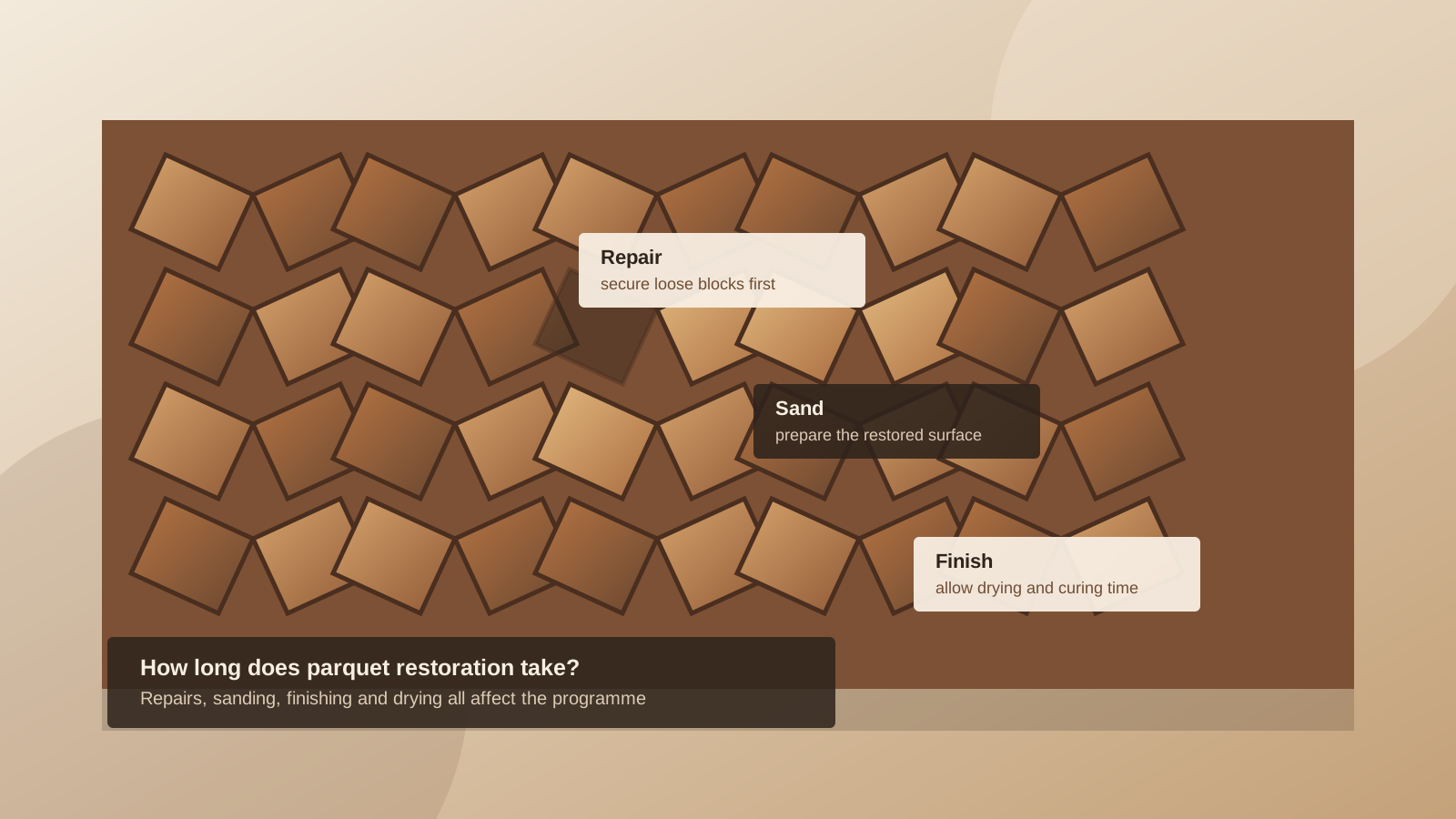
Parquet restoration usually involves more stages than restoring standard floorboards. A simple board floor may mainly need preparation, sanding and finishing. Parquet often needs a more detailed repair-led approach because it is made from many individual timber blocks.
The first stage is assessment. The floor is checked for loose blocks, missing sections, movement, gaps, old repairs, moisture concerns and the condition of the surrounding timber.
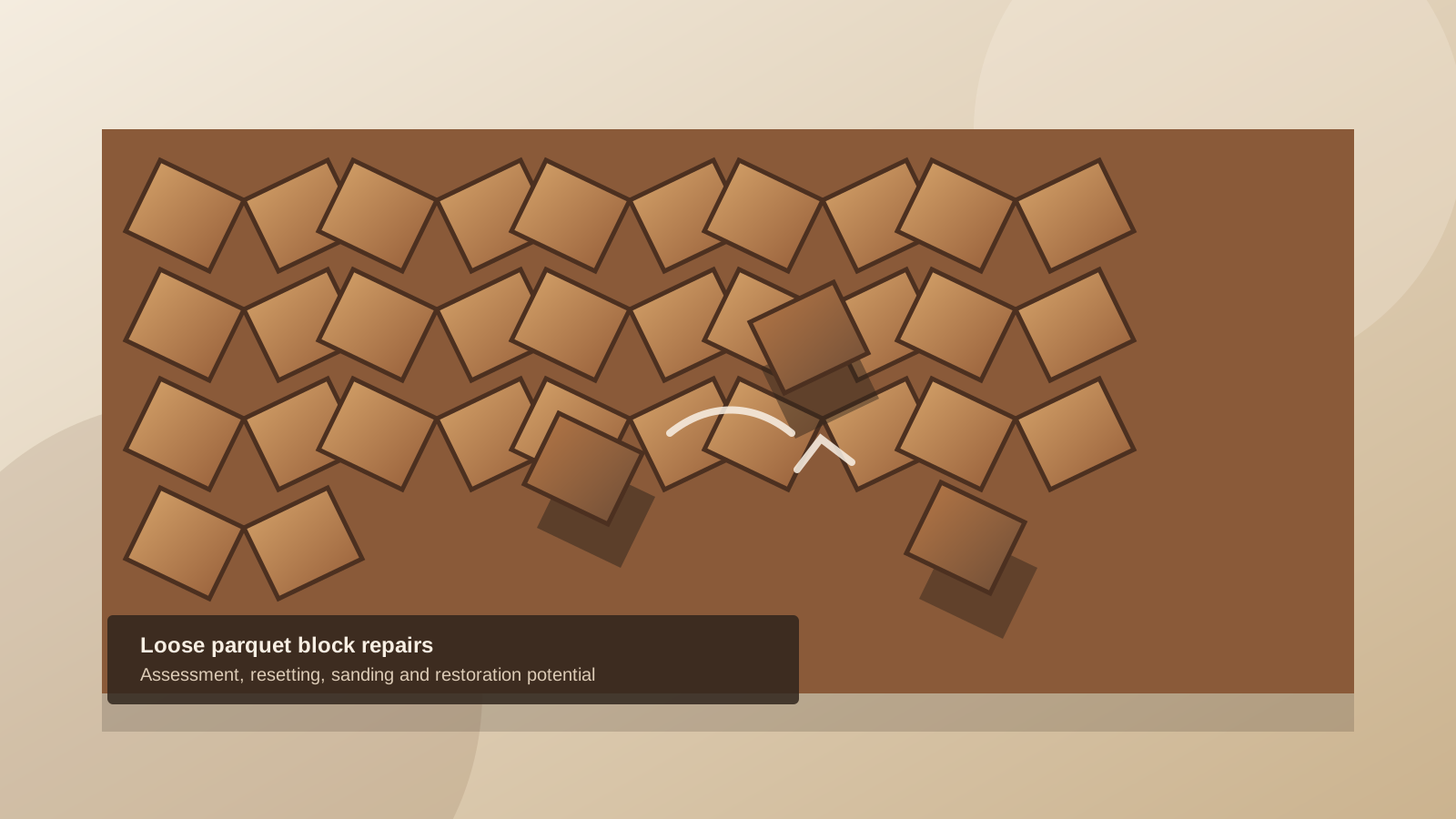
Repair work normally happens before sanding. Blocks may need to be secured, damaged pieces addressed and unstable areas prepared so the floor is sound enough for surface restoration.
Preparation follows. This can include clearing the area, protecting adjoining surfaces, dealing with thresholds and making sure the floor is ready for controlled sanding.
Sanding removes worn finish, surface scratches and old coatings where the floor is suitable. Because parquet grain changes direction from block to block, the sanding process needs care and patience.
Finishing protects the restored timber. Depending on the desired appearance, this may involve a clear finish, stain, lacquer, oil or hardwax oil system. A final inspection helps confirm that the restored floor is ready for the next stage of use.
Parquet restoration is therefore best viewed as a sequence rather than a single task. The time needed depends on how much of that sequence applies to your floor.
Factors that affect project duration
No two parquet restoration projects are exactly the same. Room size matters, but it is only one factor. Two rooms of similar size can take very different amounts of time if one floor is stable and the other has loose blocks, missing pieces or failed adhesive.
The type of parquet also matters. Finger parquet, herringbone parquet and block parquet have different patterns and repair considerations. Some patterns are more detailed around edges, thresholds and borders.
Condition is usually the biggest variable. A parquet floor with worn finish but stable blocks is normally more straightforward than one with lifting sections, old bitumen residue, water damage or a failing subfloor.
Access can influence the programme too. Hallways, stairs, tight entrances, flats, commercial premises and rooms full of furniture can all affect how efficiently the work can be carried out.
Finish selection also plays a part. A clear protective finish is usually more straightforward than a colour change, stain system or finish that needs additional preparation and drying stages.
The most useful timescale is therefore based on the actual floor, not a general rule. Photos can help with initial guidance, but heavily damaged or complex parquet may need closer assessment.
Repairs and preparation work
Repairs are often the stage that changes the timescale most. Loose blocks, missing blocks, damaged sections, adhesive issues and substrate preparation all need to be handled before the final surface work begins.
If only a few blocks are loose, repair work may be relatively contained. If larger areas have lifted or sound hollow, the preparation stage can become more involved.
Our guide to whether loose parquet blocks can be repaired explains why the cause of the movement matters. A block that has simply lost bond is different from a section that has lifted because of moisture or subfloor failure.
Wood floor repairs may include lifting loose blocks, removing failed adhesive, preparing the substrate, replacing missing pieces where possible and securing blocks back into the pattern.
This repair work should not be rushed. Sanding over unstable parquet can leave the floor looking better for a short time while the underlying problem remains. A stable floor gives the finishing stages a better foundation.
Preparation can also involve practical details such as protecting adjoining flooring, planning access, checking thresholds and discussing furniture arrangements. These tasks are not always dramatic, but they help the project run more smoothly.
Sanding and finishing stages
Once repair and preparation work is complete, the sanding stage can begin. Parquet normally requires multiple sanding passes, moving through grades carefully to remove old finish and prepare the timber for finishing.
Edge work and detail areas often take time. Parquet patterns frequently meet thresholds, fireplaces, skirting and doorways in ways that need careful handling.
Modern dustless floor sanding helps control airborne dust and keeps the working environment cleaner than traditional sanding methods, although no sanding process should be described as entirely dust-free.
If a stain or colour change is required, this adds another stage. Staining needs careful preparation because parquet includes changing grain direction, mixed blocks and natural colour variation.
Wood floor staining and finishing may involve sample discussions, stain application, drying time and protective coats. The chosen finish affects both the appearance and the practical programme.
Lacquer, oil and hardwax oil systems each have their own application requirements. The right choice depends on appearance, usage and maintenance expectations, not speed alone.
Finishing is one of the stages homeowners notice most, but it relies heavily on the quality of the earlier preparation. Good sanding and finishing cannot fully compensate for loose blocks or unresolved movement beneath the surface.
Drying and curing times
Drying and curing times are important, but they are often misunderstood. A floor can be dry enough for very careful light use before the finish has reached its fuller level of durability.
Drying usually refers to the point at which a coat can be handled, walked on cautiously or followed by another coat. Curing refers to the longer process where the finish continues to harden and develop resistance.
Lacquer systems, oil finishes and hardwax oils all behave differently. Temperature, ventilation, humidity and the amount of finish applied can also affect how the floor dries.
This is why it is sensible to avoid rigid promises from a distance. A finish may be ready for one type of use before it is ready for heavy furniture, rugs, pets or normal family traffic.
Furniture return needs particular care. Heavy furniture, chair legs, rugs and protective coverings can mark or restrict a finish if they are put back too soon. The safest advice depends on the finish system used on your floor.
Good communication at this stage matters. Before work begins, homeowners should understand when light access may be possible, when furniture can usually be considered, and what aftercare is needed while the finish continues to cure.
Large versus small parquet projects
Larger parquet projects usually take longer overall, but time does not always scale in a simple straight line. A small hallway with lots of edges, thresholds and loose blocks can be more complex than a larger open-plan room in good condition.
Single rooms are often easier to plan because access and furniture movement are more contained. Hallways can be more disruptive because they affect movement through the property.
Open-plan spaces may be efficient once prepared, but they often involve larger continuous areas, more furniture planning and greater attention to the finish programme.
Commercial parquet floors can introduce additional considerations such as working hours, customer access, larger floor areas and coordination around business operations.
The pattern itself can also influence time. Borders, intricate herringbone layouts and mixed repairs usually need more attention than a simple, stable block layout.
The fairest expectation is that project duration reflects both floor area and complexity. A good quote should explain the likely stages rather than presenting size as the only factor.
How to minimise disruption
A little planning can make parquet restoration easier to live with. Before work begins, think about furniture, access, pets, parking, keys and which rooms need to remain usable.
Furniture planning is especially important. Large items may need moving out of the room or into another area before restoration begins. If the work is being completed in stages, the order of rooms should be discussed in advance.
Access arrangements can also save time. Clear routes, available parking and agreed arrival times help the work progress more smoothly.
Finish selection can affect disruption. Some finishes may suit your household better because of appearance, maintenance or drying behaviour. The quickest option is not always the most practical long-term choice.
It also helps to send clear photos before arranging a quote. You can send us photos of the whole room, close-up damage, loose blocks, thresholds and any known problem areas.
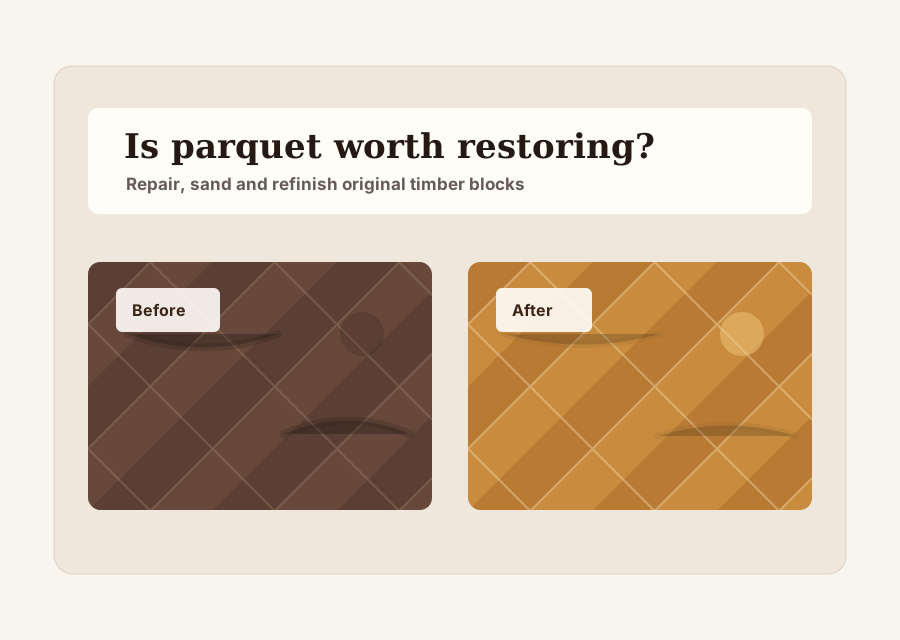
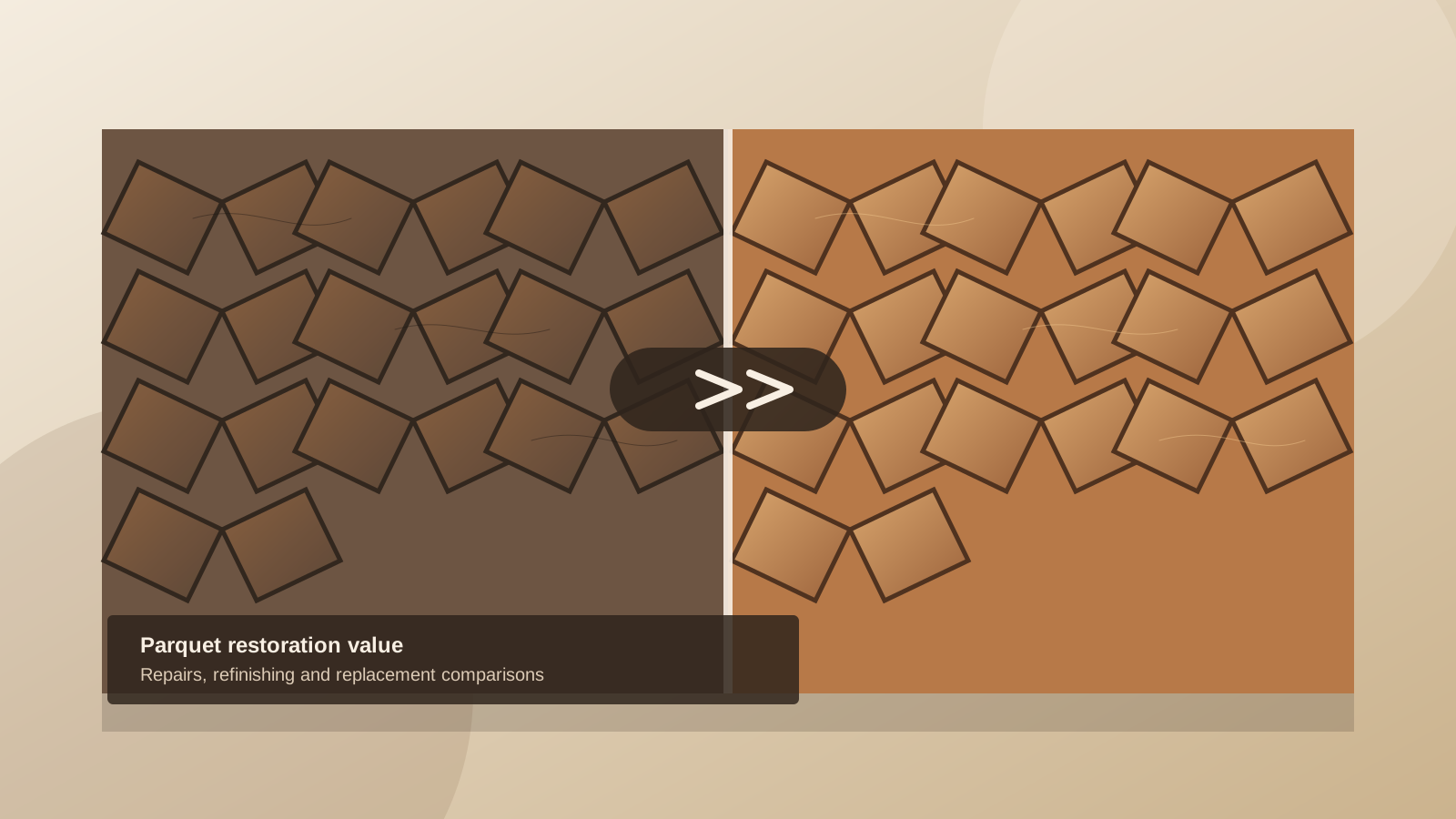
If you are still deciding whether the work is worthwhile, our guide to whether your parquet floor is worth restoring explains how condition, repairs and replacement options are assessed. For budget context, our article on whether parquet restoration is worth the cost explains how value is considered alongside the work involved.
Quick project timeline guide
Use this as a practical guide to the factors that can make a parquet restoration project simpler or more involved. It is not a fixed schedule, because the condition of the floor remains the deciding factor.
Frequently Asked Questions
How long does parquet restoration take?
It depends on floor size, condition, repairs, finish choice and drying requirements. A stable floor with minor wear is usually more straightforward than parquet with loose blocks or complex repairs.
Do loose blocks increase project duration?
Yes, loose blocks usually add preparation time because the floor should be stabilised before sanding and finishing begin.
How long before furniture can be returned?
Furniture return depends on the finish system used and site conditions. Light access and heavy furniture return should be treated as different stages.
Does staining add time to the project?
Usually, yes. Staining adds a colour stage and may require additional preparation, application time and drying consideration before protective coats are applied.
How long does parquet floor finish take to cure?
Curing varies by finish type, temperature, ventilation and humidity. A floor may be dry enough for careful light use before the finish has fully hardened.
Can parquet restoration be completed in stages?
Sometimes. Staged work may be possible depending on room layout, furniture, access, finish choice and whether the floor can be divided sensibly.